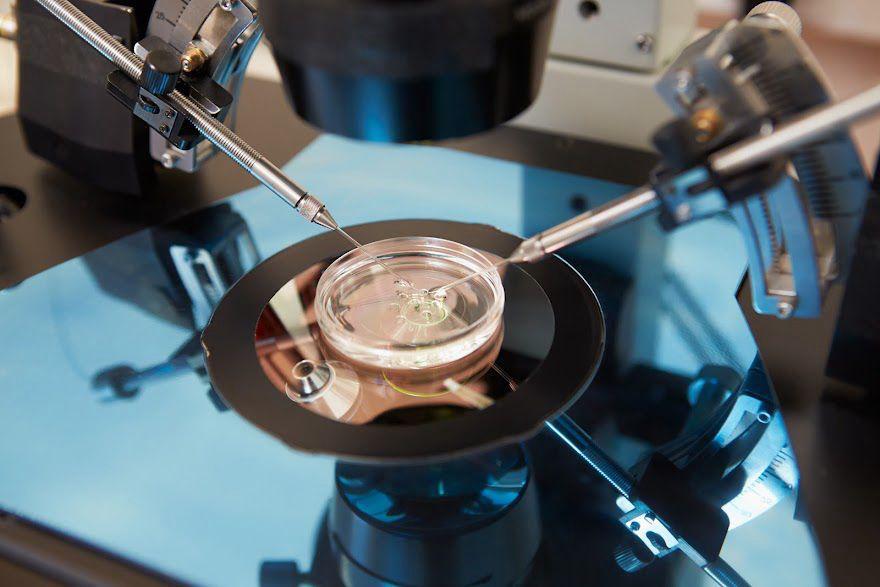
What is IVF Treatment?
For many, the journey to parenthood happens naturally. However, for some couples facing infertility, In Vitro Fertilization (IVF) offers a hopeful solution. IVF involves retrieving mature eggs from a woman’s ovaries, fertilizing them with sperm in a lab, and then transferring the embryo into the uterus to support pregnancy.
Tests Required Before IVF
Before starting IVF, several diagnostic tests help ensure optimal treatment outcomes:
- Ovarian Reserve Testing: Measures the quantity and quality of eggs.
- Semen Analysis: Assesses sperm count, motility, and morphology.
- Infectious Disease Screening: Checks both partners for infections that may affect fertility or pregnancy.
- Uterine Cavity Examination: Evaluates the uterus to ensure it can support embryo implantation.
Precautions During IVF Treatment
- Take all medications and injections exactly as prescribed.
- Avoid sexual intercourse after 6–7 days of hormone injections.
- Refrain from alcohol, smoking, and addictive substances.
- Do not lift heavy objects or engage in intense physical activity.
- Follow a nutritious, balanced diet.
- Practice stress-reducing techniques like meditation or yoga.
IVF Cycle: Step-by-Step
An IVF cycle is a structured process involving the following stages:
- Ovarian Stimulation: Hormonal injections (FSH and LH) are started from Day 2 of the menstrual cycle to develop multiple eggs.
- Monitoring: Regular ultrasounds and blood tests track follicle growth (usually for 10–12 days).
- Egg Retrieval: Once follicles mature, eggs are retrieved from the ovaries under sedation.
- Sperm Collection & Fertilization: A semen sample is collected, and eggs are fertilized in the lab.
- Embryo Culture: Embryos are monitored and grown for 3–5 days.
- Embryo Transfer: Healthy embryos are transferred into the uterus (typically Day 15–19 for fresh transfers).
- Hormonal Support: Post-transfer, patients receive hormonal medications for 12–15 days and, if pregnant, up to 10–12 weeks.
When Is Ovarian Stimulation Recommended in IVF?
Ovarian stimulation is typically advised for:
- Women with low ovarian reserve
- Advanced maternal age
- Irregular ovulation
- Fertility preservation or egg donation cycles
It aims to produce multiple eggs in one cycle, improving the chances of creating viable embryos.
How Ovarian Stimulation Works
- Injections of FSH and LH are given daily for 8–14 days.
- Monitoring is done via ultrasound and hormone levels.
- A “trigger shot” is administered once follicles mature, followed by egg retrieval.
- This process increases the number of embryos available for implantation or freezing.
Success Rate: IVF with ovarian stimulation has a success rate of 40%–55% per cycle, depending on the patient’s age and fertility profile.
Benefits of IVF at Panacea Fertility Center
- Higher Pregnancy Rates: IVF enhances conception chances for couples with various infertility challenges.
- Donor Option: Availability of egg or sperm donors when needed.
- Genetic Screening: Preimplantation Genetic Testing (PGT) helps screen embryos for genetic conditions.
- Flexible Timing: IVF allows couples to plan pregnancy on their terms—emotionally, physically, and financially.

Success Rate
40% to 60% of the parenthood journey

Common Use
It accounts for 40% to 50% of infertility treatments

Treatment Duration
2 to 3 weeks starting from the 2nd day of the menstrual cycle