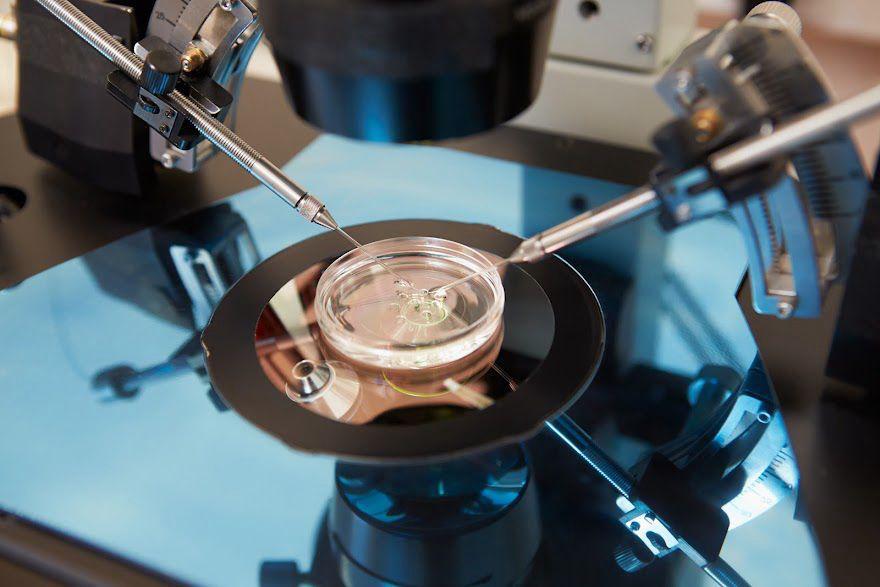
Blastocyst Transfer
What is Blastocyst Transfer?
Blastocyst transfer is an advanced IVF procedure where a fertilized embryo is cultured in the lab for 5 to 6 days until it reaches the blastocyst stage—a more developed phase with a fluid-filled cavity and organized structure. Once matured, one or more blastocysts are selected and transferred into the uterus to increase the chances of successful implantation and pregnancy.
The process starts with egg retrieval, followed by fertilization using IVF or ICSI. The resulting embryos are carefully monitored in an incubator. Only the healthiest embryos that successfully reach the blastocyst stage are chosen for transfer.

When Should You Consider Blastocyst Transfer?
Blastocyst transfer is especially beneficial for:
- Women under 35 with multiple embryos available
- Those with previous IVF failures
- Couples seeking higher implantation chances with fewer embryos transferred
- Situations where embryo selection and timing are critical for success
Because blastocysts are more developed, they have already undergone a natural selection process—making them more likely to implant and develop into a healthy pregnancy.
Benefits of Blastocyst Transfer
- Higher implantation and pregnancy rates
- Enables selection of top-quality embryos
- Better alignment with the uterine lining (endometrium)
- Reduced chance of multiple pregnancies with single embryo transfer
Important Considerations
While blastocyst transfer has many advantages, it may not be suitable for everyone. Women with low egg reserves or poor embryo development may benefit more from earlier-stage embryo transfers, as not all embryos will survive to the blastocyst stage.

Best For Women with tubal blockages

Recommended For Patients with Endometriosis

Commonly Used In Women with Polycystic Ovary